
Split shipments: two boxes, one promise
 Verified & Reviewed


 Copy Link
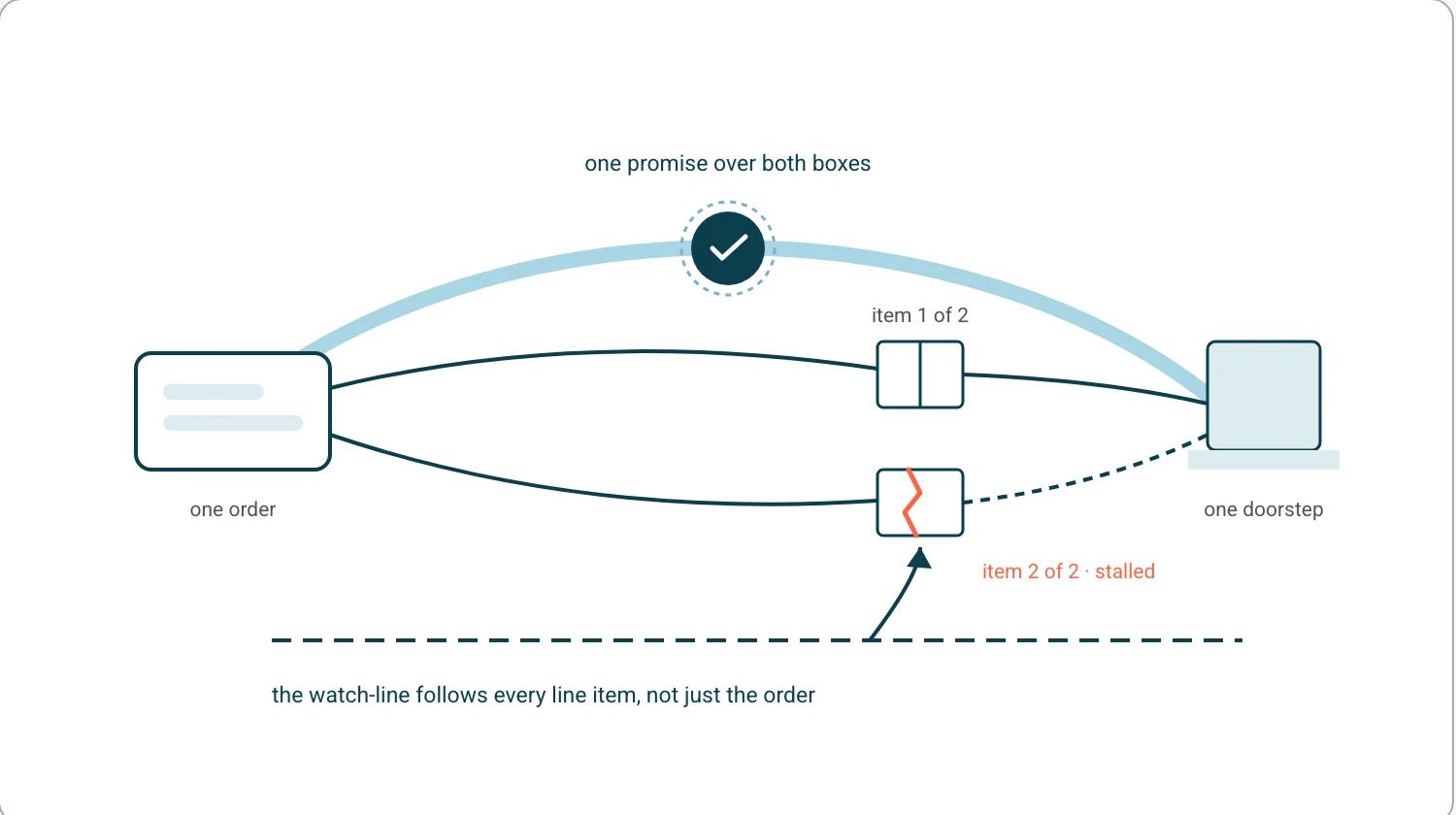
A split shipment is one order delivered in more than one parcel: items in different warehouses, different suppliers, or different availability dates, so the order ships as it can rather than as one box. Operationally it is sometimes the right call. My frame for it, from two decades running ecommerce brands: the customer did not order parcels, they ordered an outcome, and however many boxes you use, there is still exactly one promise. Every order is a promise. Keeyu keeps it, across however many shipments it takes. The mistake is not splitting orders. The mistake is letting the promise split with them, which is exactly the visibility gap proactive e-commerce operations, the system of action for e-commerce, exists to close.
When splitting is right, and what it costs
Split when waiting would break the promise: half the order can ship today and the other half is a week out, so the first half goes. The order management system page covers where that routing decision should live. Do not split for warehouse convenience, because every extra parcel is a separate carrier charge, separate packaging, and separate labor, and two boxes can nearly double one order's shipping cost. A sound operating rule: split only when you are genuinely sending two different packages, such as an item on pre-sale or out of stock, or a free gift that follows later. Send what you have, and the rest when it is available. The routing logic should always try the consolidation question first: is there one location that can fill the whole order inside the promise, even at slightly higher cost? The complexity scales with the catalog. A nutrition business doing about 600,000 orders a year runs pre-orders, bundle deals, and subscription bundles, where splitting is structural rather than occasional. The everyday version is smaller and just as messy: a customer orders an air fryer and a hair curler that ship from two different suppliers, and one order becomes two half-truths in your systems.
That is the most common entry of its kind in the 786 pain points we mined from 270 customer call transcripts between May 2025 and May 2026: partial fulfillments that disagreed from one system to the next, orders stuck in the middleware between the storefront and the ERP, and integrations that broke during an ERP migration. A split is where a stack's disagreements become visible to the customer first.
Where split shipments silently break
The failure modes cluster in the gaps between systems, which is why they go unseen. The order shows part-fulfilled and stops being anyone's job, a state covered in depth on the order fulfilled page. One parcel delivers and the other stalls, and your platform's single status field cannot say that. Refunds get ugly: we found one brand whose bundled orders could not be partially refunded or handled at the line-item level at all, a structural limitation nobody had noticed because no system was watching orders at that grain. And the support queue tells the story last. On one scoping call I played a brand's situation back to them: most of their where-is-my-order tickets were triggered by slow freight or split shipments, and they had no consolidated view across the four systems they ran. By the time it is visible in tickets, the customer has already had the bad version of the experience. Fulfillment breaks silently. Something has to hear it first.
Splits also drive returns: an unbundled order arriving in pieces gets sent back in pieces, which the return rate formula page is the right way to measure.
The complexity is not the two boxes, it is the number of places they can come from. Some of our customers ship a million orders a year out of seven warehouses across five storefronts, and one runs a hundred drop shippers he could not see into at all until we connected them, which I talked about on The Ecommerce Edge. Every extra origin adds a promise nobody owns end to end.
Volume is not what makes this hard. On eCommerce Australia I said: "as you add in complexity, either inbound from your suppliers, we solve for complexity. That's precisely what we do. So we've got a customer, they only process 800 to 1000 orders a month ... each order is about 15 grand average order value. And so for them, it's the complexity of suppliers to get that all together that we solve for."
The dangerous half of a split shipment is the shopper who says nothing. Some ask where the second parcel is and become a ticket. The rest don't say anything, but they're upset and they just leave, which is the split I described on The Breakout CEO. Your ticket count only ever shows you the first group.
Two boxes, one conversation
The FTC's Mail, Internet, or Telephone Order Merchandise Rule requires a seller that cannot ship the merchandise within the time it stated, or within 30 days where it stated none, to offer the buyer, without prior demand, the option to consent to the delay or cancel the order for a prompt refund. Every split is a communication event. At dispatch, the customer needs to know their order is arriving as two deliveries, what is in each, and when each lands, through the milestone flow on the shipping notifications page. Miss that and you have manufactured a guaranteed "where is the rest of my order" ticket at double the investigation cost, because now the answer spans two carrier journeys. The deeper fix is watching each line item, not each order, against the promise: Keeyu tracks every order at the grain where splits actually live, across storefront, warehouse, suppliers, and carriers, catches the half that stalls, and acts before the customer writes in. Detect. Decide. Act. Keeyu gets shoppers what they want, on time, as promised, in however many boxes. The architecture view is on the order fulfillment system page, the discipline on the post-purchase operations hub, and a demo will show your own split-order blind spots. Every order is a promise. Keeyu keeps it.
I call the thing you are managing here the age of anxiety. When a shopper hits the buy button, they do not know if the order will arrive on time, and there is no guarantee it arrives as promised. That is a really uncomfortable feeling, and a second box nobody mentioned lands right on it. I described that on The Breakout CEO. The second box needs a sentence attached to the first one, sent before they go looking.
Frequently Asked Questions
What is a split shipment?
One order sent in more than one parcel, usually because items sit in different warehouses, ship from different suppliers, or become available at different times. The customer placed one order and now has two or more deliveries to receive.
Why do split shipments cost more?
Every extra parcel is a separate carrier charge, separate packaging, and separate handling. Two boxes for one order can nearly double the shipping cost of that order, which is why smart routing tries to consolidate before it splits.
Should I tell customers when their order ships in multiple packages?
Always, and before they notice. One order arriving as two deliveries on different days generates a "where is the rest of my order" ticket unless each parcel's contents and dates are communicated clearly at dispatch.
How do I reduce split shipments?
Route orders to the location that can fill the whole order first, even at slightly higher single-parcel cost. Split only when the delay from waiting exceeds the promise, and treat every split as a communication event, not just a fulfillment event.
References
- Keeyu customer results: keeyu.com/customer-stories
- The Breakout CEO #86, The Pivot This Founder Made After an Investor Called It Impossible - one in five US shoppers not getting orders on time, and the ticket ratios behind it.
- Add To Cart #599, How to Prevent "Where is my Order?" Complaints Before Customers Ask - preventing "where is my order" before the customer asks.
- Marketing for SMEs, Jevon Le Roux on the E-Commerce Mistake Costing Millions - the orchestration layer, and the 55% ticket cut at EHP Labs.
Keep the promise.
See how Keeyu catches and fixes post-purchase issues before customers notice.
In one call, we’ll map your operations and show how Keeyu detects issues, decides what needs to happen, and takes action across your existing systems.
We’ll confirm your integration requirements and rollout plan during the demo.
