
Customer order tracking: what shoppers want, and what they never say
 Verified & Reviewed


 Copy Link
Customer order tracking is the shopper-facing side of order visibility: the tracking page, the shipping confirmation, the delivery updates that tell a customer where their purchase is between checkout and doorstep. For the merchant it is also an internal capability, one view of every order across storefront, payments, warehouse, and carriers. My view: the best customer service is if the customer never needs to talk to you, never needs to call, never needs to complain. It just works. Shoppers do not actually want tracking. They want the thing they paid for, on time, as promised, and tracking is the reassurance they settle for in the meantime. Every order is a promise. Keeyu keeps it. That is the standard this page holds tracking to, and it is the difference between customer order tracking as a page and proactive e-commerce operations as a system of action.
What shoppers want from order tracking
The practical checklist is short. A tracking link that works, on your domain rather than a carrier's. Updates that arrive without being asked for, at the milestones that matter: confirmed, shipped, out for delivery, delivered. And an honest answer, fast, when something goes wrong. The last one is the whole game, and it is the one most tracking setups fail. Jason Greenwood gave me the plainest example when I was a guest on The Ecommerce Edge. For about three years he bought bourbon from one online liquor store in New Zealand, hundreds of dollars a month, then he moved countries and the orders stopped in a day. What he wanted was a call from a person who had noticed. My answer was what we saw at P.E. Nation: once my co-founder Tracy's team could detect issues in real time, they were no longer firefighting and had the hours for exactly that outreach. Loyalty is built or burned in exactly those moments, and a status page cannot tell a customer you noticed. A person, or a system acting for one, has to.
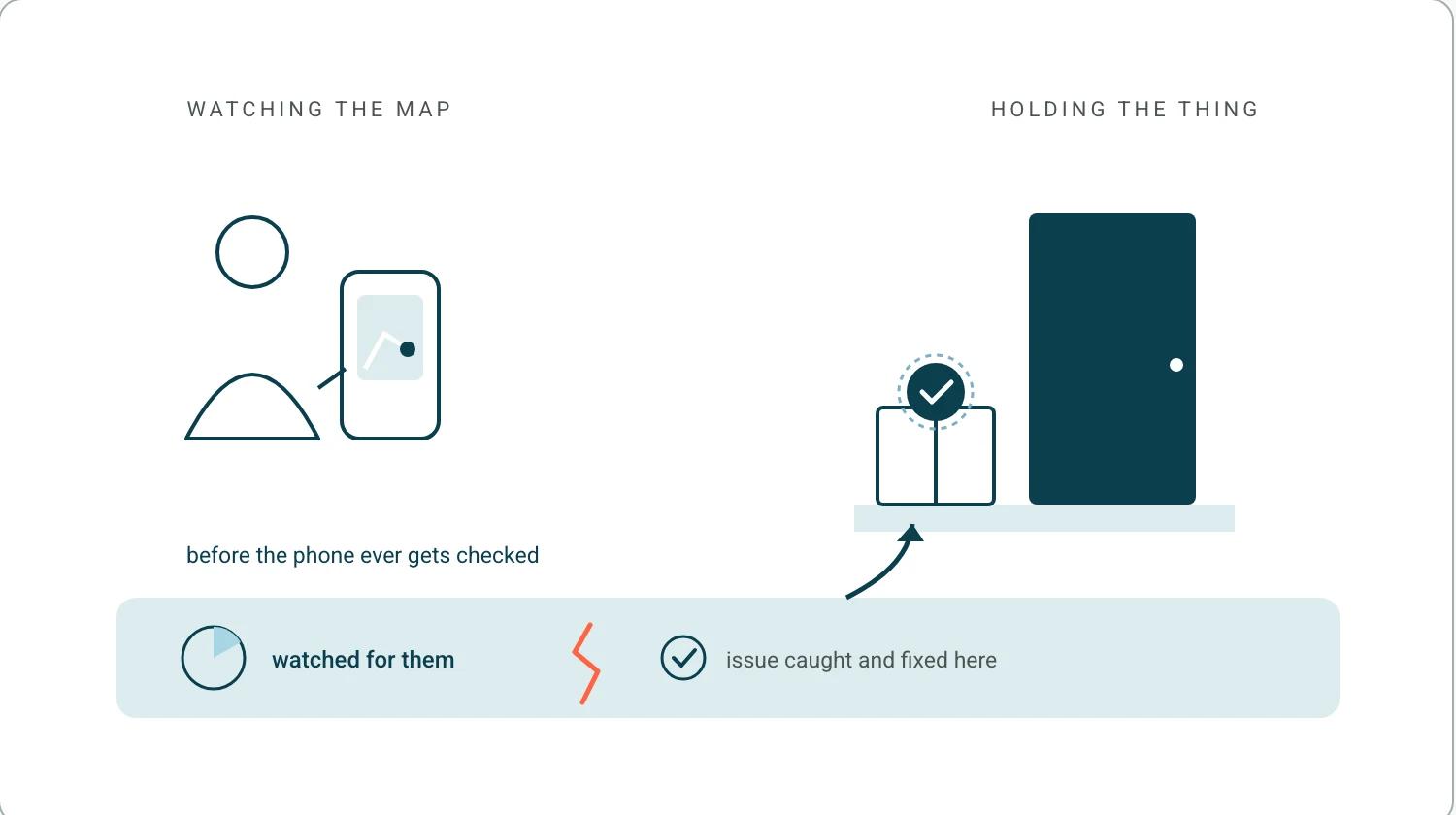
What they want is to not need it. Around 123 million hours went into customer service calls in a single year, a number I cited on Add To Cart. That's a lot of pain. The anxiety around not getting something on time is the most painful part of e-commerce. We are taking away something they never wanted in the first place. The best version of order tracking is the message that arrives before the shopper thinks to check.
It is the reason we co-founded Keeyu. On a Retail Fest 2026 panel I said: "my co-founders and I have a strong belief that the term where is my order should not exist in ... the lexicon of customer service."
What the tracking page cannot see
The last leg of that journey has its own failure profile, covered on the final mile delivery tracking page. A tracking number is born when a carrier scans a parcel. A large share of broken orders break before that scan ever happens: stock that fails to allocate, a bundle that splits, a warehouse sync that silently drops the order. The shopper's tracking page shows "label created" for four days and tells them nothing, which is why "where is my order", exchange, and return queries statistically account for around half of all support tickets even at stores with tracking pages. Most ecommerce operations are reactive here, waiting for the inbound query, which is the difference laid out on the proactive vs reactive page, and while helpdesk tools automate the answers, they do not touch the root cause. The order tracking software page maps the tool landscape end to end. The short version: a tracking page just tells you what is going wrong, and I would rather be fixing the root cause.
A tracking page starts at the first carrier scan. The failures that generate the tickets usually happen before it, which is why we stitch the systems together and triangulate each order against the customer promise, across roughly thirty to thirty-five checkpoints from placed and paid through picked, packed, shipped, delivered and returned, a number I gave on The Ecommerce Edge. When an order has not moved, we flag it in real time with precisely what system and what error. Everything upstream of the first scan is invisible to the page your shopper is refreshing.
The systems holding the order do not raise the alarm either. On The Ecommerce Edge I said: "those systems are designed, as we call it, a system of record to do a specific task, and they do it well, but they're not designed to surface broken service levels."
Operators describe the same blind spot from the other side. In the 786 pain points we mined from 270 customer call transcripts between May 2025 and May 2026, every brand called the period after the parcel leaves the warehouse a black hole, unprompted, and tracking sync failures were most often discovered when a customer chased. The page the shopper is refreshing and the dashboard the team is watching go dark at the same point. Most brands don't know how many orders have problems customers never hear about. The tracking I advocate for is complaint prevention: how many ops issues are detected and fixed before they become a "where is my order?"
Tracking as a team capability, not just a customer page
The version of customer order tracking that changes your operation is internal: every system that touches an order, orders, payments, ERP, warehouse, carriers, returns, stitched into one platform watching every order in real time. The way I describe it on calls: one central command, one central view of all your orders in real time, from payment through placement, delivery, and returns. That is what lets a team answer any shopper in seconds instead of alt-tabbing through five logins, and more importantly, it is what lets them act before the shopper writes in. At Budgy Smuggler, whose team tells their own customer story, the ops team opens one dashboard to see whether orders are going out on time or stuck in transit, across the warehouse, three stores and click and collect, instead of a manual scroll through the back end of Shopify, and jumps on missed orders before customers chase them up. The same pattern applies on the reverse leg, where returns management queues age quietly out of sight. You can't fix what you don't see, and by the time it's a ticket, the damage is already done.
The capability worth having is deciding, not watching. On a stock-out the platform assembles the answer before the shopper writes in: what else is available, when replacement stock lands, and what waiting is worth to them, which I described on The Ecommerce Edge. A tracking page shows a status and leaves the decision with the customer.
From watching orders to keeping promises
One of our customers had a shopper place a roughly $500 order on express delivery. The system spotted the delay early, notified the fulfillment team, and the order arrived on time. The shopper never knew there had been a problem, which is precisely the point. Keeyu gets shoppers what they want, on time, as promised. Detect the breaking promise, decide the fix, act on it. Tracking calms customers. Keeyu fixes the order behind it. If your store runs on Shopify, the Shopify order tracking page covers what the platform gives you natively and where it stops, and the post-purchase operations hub maps the full discipline. To see your own orders in one view, book a demo. Every order is a promise. Keeyu keeps it.
Frequently Asked Questions
What is customer order tracking?
The ability for a shopper to see where their order is at every stage from purchase to delivery, and for the merchant's team to see the same thing across all systems. Done well it answers the question before the shopper asks it.
How do I let customers track their orders?
At minimum, send the carrier tracking link in the shipping confirmation. Better is a tracking page on your own domain with automated email or SMS updates at each milestone, and a team that reaches out first when a delivery goes wrong.
Why do customers ask "where is my order" when tracking exists?
Because tracking only reports what the carrier has scanned. When an order is stuck before dispatch, split across shipments, or stalled in transit, the tracking page shows nothing useful, so the shopper contacts support. Around half of all support tickets are WISMO, exchange, or return queries.
References
- Keeyu customer results (Budgy Smuggler, EHP Labs): keeyu.com/customer-stories
- The Breakout CEO #86, The Pivot This Founder Made After an Investor Called It Impossible - one in five US shoppers not getting orders on time, and the ticket ratios behind it.
- Add To Cart #599, How to Prevent "Where is my Order?" Complaints Before Customers Ask - preventing "where is my order" before the customer asks.
- Marketing for SMEs, Jevon Le Roux on the E-Commerce Mistake Costing Millions - the orchestration layer, and the 55% ticket cut at EHP Labs.
- The Ecommerce Edge E637, Proactive Post-Purchase Ecommerce Ops & CX - Jason Greenwood's lapsed-buyer example, the thirty to thirty-five checkpoints and the stock-out workflow.
- Add To Cart #578, Stop Customer Problems Before They Start: Inside Keeyu's AI Ops - the 123 million hours figure and the $500 express order.
- Keeyu x Budgy Smuggler, customer story video - the Budgy Smuggler team on using Keeyu.
Keep the promise.
See how Keeyu catches and fixes post-purchase issues before customers notice.
In one call, we’ll map your operations and show how Keeyu detects issues, decides what needs to happen, and takes action across your existing systems.
We’ll confirm your integration requirements and rollout plan during the demo.
