
Shipping protection: what it covers, and what it never fixes
 Verified & Reviewed


 Copy Link
Shipping protection is a checkout add-on that lets the customer pay a small fee, typically a dollar or two, to insure their package against loss, theft, or damage. When a parcel goes missing, the protection provider funds the refund or reshipment instead of your P&L, and the widget class that sells this (Route, Corso, Seel and peers) plugs straight into Shopify. My take after two decades running ecommerce brands, stated as the rule I hold every post-purchase tool to: protection pays out, prevention keeps the customer. Every order is a promise. Keeyu keeps it, and an insurance payout is what happens after a promise has already broken. This page is honest about both halves: what protection genuinely solves, and the part of the problem it cannot touch, which is where proactive e-commerce operations, the system of action for e-commerce, does its work.
What shipping protection genuinely solves
Three real problems, and it is fair to credit them. First, margin erosion: lost and damaged parcels stop being a random tax on your P&L because the liability shifts to the provider, funded by the customer's fee. Second, claims workload: carrier claims are slow, evidence-heavy paperwork with their own filing windows and proof requirements (see USPS claims for the shape of it), and outsourcing it is a genuine relief for a small CX team. Third, resolution speed for the customer: a protected shopper gets a reshipment decision in hours rather than waiting out a carrier investigation. If your delivery failure rate is genuinely irreducible, structured protection beats eating the cost. No argument.
What it never fixes
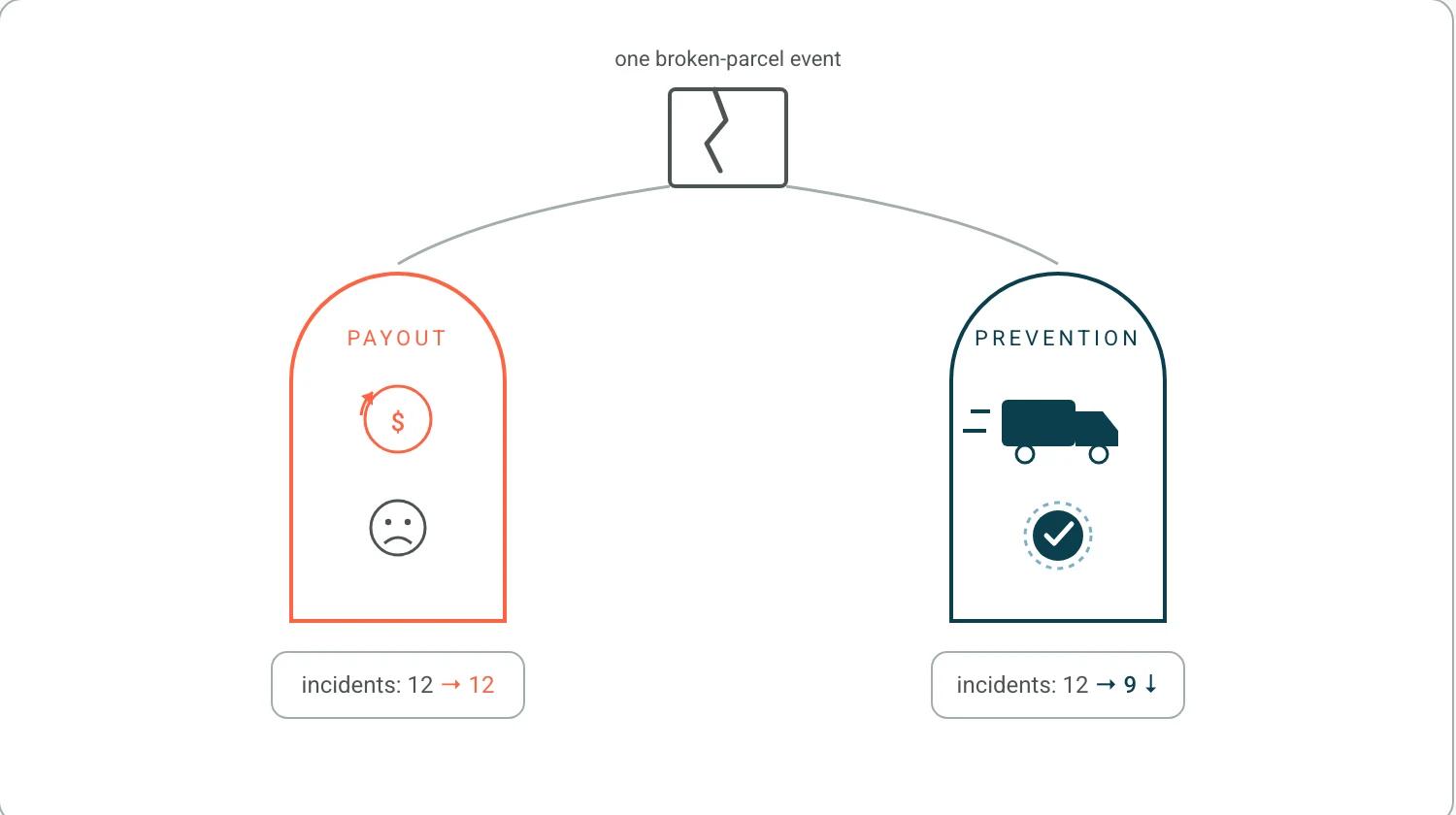
The incident still happened. The shopper still stood at the door without their order, and no refund un-rings that bell. Worse, protection creates a quiet incentive to treat delivery failure as solved because it is funded. It is not solved. It is subsidized. The operational version of this problem looks different, and the workflow is not "await claim." We work backwards from the promise along every stage of the order, so when an order hasn't moved between stages for a certain amount of time, we treat it as likely lost in transit and the resolution workflow starts right then, before the shopper notices. The customer whose replacement was already moving when they got the message tells a very different story about your brand than the one who got their two dollars back. The team in our EHP Labs story describes the before picture: always on the back foot, not recognizing something until a customer pointed it out. Now they are on top of things before they snowball. The best customer service is if the customer never needs to talk to you, never needs to call, never needs to complain. It just works. That is operations, not insurance.
Compare it against what an actual recovery looks like. We find alternative stock, put the replacement on express so it arrives next day, ship it, and tell the shopper: your order was lost, you are getting it tomorrow on a new tracking number, sorry about that, but we picked it up before you did. Then we sort it out with the carrier. That is the sequence I described on Add To Cart. Protection reverses the transaction. This reverses the experience, and only one of those keeps the customer.
The discovery-call test
On a recent discovery call, a retailer opened with "no challenges." Then we walked through their 55 retail locations, click and collect, and shipping flows, and the challenges surfaced one by one. Shipping protection hides in exactly that gap: brands buy it, the refunds flow, and the underlying failure rate never gets examined because nobody is measuring it anymore. The cost-benefit version of this decision has its own page: is shipping protection worth it. Before you renew any protection program, pull one number: what percentage of your orders needed it this quarter, and is that number moving? If it is flat or rising, you are insuring a process problem. That is the cost of waiting for complaints. Traditional helpdesks manage the complaints reactively. Our whole aim is to prevent the complaint by fixing the issue at the source.
Add one question to the call: what promise is this priced against? We write ours as order before twelve, pay for express, ships same day, arrives tomorrow, and work backwards from it, which I explained on Add To Cart. A protection product that cannot name the promise it is insuring is insuring your freight, not your commitment.
Protection or prevention: the honest answer is the order
Run them in the right order. Prevention first: detect the stalling order, fix it, tell the shopper before they ask. What each delivery exception type means and how to act on it is on the delivery exception page, and the visibility tooling underneath it is on the order tracking software page. Protection second, for the residue no operation can prevent: the genuinely stolen porch package, the truck fire. Keeyu is not an insurance product and does not want to be. Keeyu gets shoppers what they want, on time, as promised, so the claim never needs to exist. Detect. Decide. Act. See what your own preventable-failure rate looks like in a demo, or zoom out on the post-purchase operations hub. Every order is a promise. Keeyu keeps it. Insurance is for the ones the world breaks anyway.
The reason so much of this is invisible is structural. Every system after the buy button does its own job well, and none of them is designed to notice that the customer promise is about to break, so the failure is silent and the first person to detect it is the shopper. That is the framing I use on Marketing for SMEs. Insurance prices that silence. It does not end it.
Frequently Asked Questions
What is shipping protection?
A checkout option where the customer pays a small fee to insure their package against loss, theft, or damage. If something goes wrong, the protection provider funds the refund or reshipment instead of the merchant's P&L.
How does shipping protection make money for merchants?
The customer pays the fee, claims are funded by the provider, and some programs share margin with the merchant. It converts an unpredictable cost line into a small, customer-funded one, and can become a modest revenue stream.
Does shipping protection reduce support tickets?
It shortens the resolution once a customer reports a problem. It does not reduce how often problems happen, and the customer still experienced the lost or damaged delivery. Deflecting the claim is not the same as preventing the incident.
References
- Keeyu customer results: keeyu.com/customer-stories
- The Breakout CEO #86, The Pivot This Founder Made After an Investor Called It Impossible - one in five US shoppers not getting orders on time, and the ticket ratios behind it.
- Add To Cart #599, How to Prevent "Where is my Order?" Complaints Before Customers Ask - preventing "where is my order" before the customer asks.
- Add To Cart #578, Stop Customer Problems Before They Start: Inside Keeyu's AI Ops - working backwards from the customer promise: order before twelve, pay for express, ships same day, arrives tomorrow.
- Marketing for SMEs, Jevon Le Roux on the E-Commerce Mistake Costing Millions - the orchestration layer, and the 55% ticket cut at EHP Labs.
- USPS, File a Claim - carrier claim filing windows and proof requirements.
Keep the promise.
See how Keeyu catches and fixes post-purchase issues before customers notice.
In one call, we’ll map your operations and show how Keeyu detects issues, decides what needs to happen, and takes action across your existing systems.
We’ll confirm your integration requirements and rollout plan during the demo.
