
Proactive customer service: the tactics that actually cut tickets
 Verified & Reviewed


 Copy Link
Proactive customer service means finding and fixing a customer's problem before they experience it or have to contact you. In ecommerce, where most tickets trace back to an operational break, it is less a support philosophy than an operations capability: proactive e-commerce operations, the system of action for e-commerce. My stake in the ground after two decades running these brands: e-commerce is no longer about waiting to fix problems after they happen, and the secret to customer loyalty is preventing the operations issue in the first place. I got there by doing the manual version for years. At P.E. Nation I started at 7 a.m. every day and sat with Tracy, who ran customer service, for the first fifteen minutes, going through what had gone wrong yesterday. Then I'd walk to whichever team caused it. That ritual was proactive service run by hand, and it worked, but it depended entirely on two people showing up early and reading tickets. Here are the tactics that do it at scale.
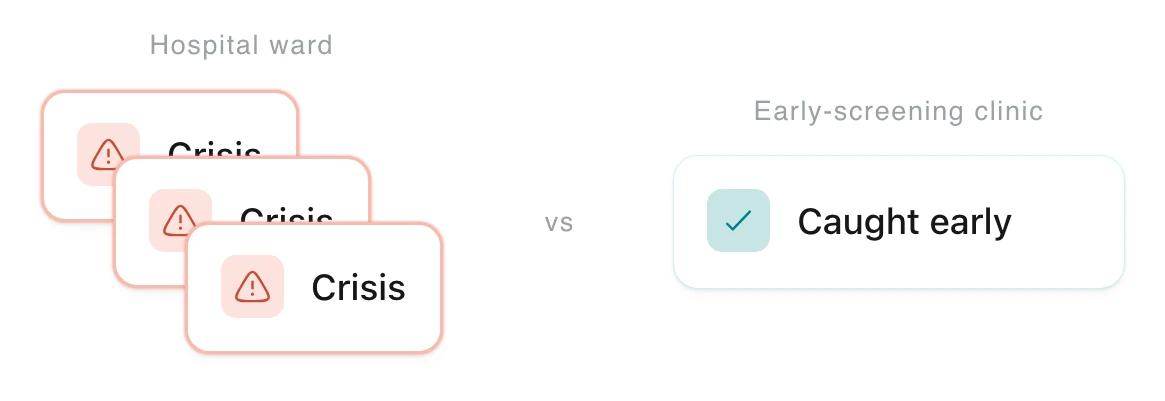
My belief underneath all of it: the best support is the call the customer never has to make. A complaint happens because the customer didn't get what they ordered on time. What I identified at P.E. Nation is that if you can find the reason why and fix it before the customer even knows, that's the best customer service. It just works, because you saw the problem two or three steps ahead.
Six proactive tactics that work in ecommerce
1. Delay alerts before the customer asks
The single highest-leverage move. When an order misses its ship-by promise, tell the customer first, with a new date and something for the inconvenience. The part that still surprises me: it's not the delay that kills the customer relationship. It's the silence. Clutch Glue had the same realization, and the win wasn't just visibility. It was acting on it before the customer even had to ask. Do it manually from a daily stuck-orders report, or automatically: Keeyu watches every order against the checkout promise and fires the outreach the moment one drifts.
2. The out-of-stock save
An ordered item fails to allocate. Reactive: the customer emails angry on day six. Proactive: the system flags it the moment stock fails, checks alternative inventory and arrival times, and offers options before the customer notices, whether that's wait with a discount, swap, or refund. At EHP Labs that workflow used to take their team 45 minutes per case. It now runs in five. The example I give on calls: you ordered the black one and we don't have it, but more arrives in two weeks, or we have a navy, or you can take a refund or store credit. The customer picks the navy, and Keeyu cancels the black item, raises a new sales order for the navy, and pushes it to the warehouse.
The action side of that save is direct: a cancel-and-refund runs as one click, canceling the order in Shopify, issuing the refund, and emailing the customer about the unfulfilled status.
3. Lost-in-transit replacement
When a parcel stops moving for a set duration, don't wait for the tracking-page rage. The rule we encode is blunt: if it's the second of the month and an item is still in transit from well before, it isn't slow, it's lost. So we detect it, cancel the original in Shopify, raise a new order on express, push it to the warehouse, notify the customer, and file the carrier claim. In Australia that whole chain runs automated against Australia Post. By hand, you would have had to look in the carrier portal, identify that the parcel hadn't moved, check for stock, cancel an order, create an order, get a discount code, draft an email, and send it. And the customer hasn't called you yet.
4. Bulk outreach when operations wobble
Warehouse a day behind? A style oversold across dozens of orders? One message to each affected customer beats fifty inbound tickets. A CX team can send a hundred customized emails in one click, or bulk-cancel and refund at real scale: one of our customers came out of an Afterpay sale and bulk canceled and refunded 700 orders in a single action. Doing that by hand is a week of somebody's life and a hundred angry emails in the meantime.
5. Watch the reverse leg too
Returns are where proactive teams quietly lose. On the fifth of the month, five returns still sitting unprocessed means five customers who have not had their money back and are about to write in about it. The proactive version is to age the return queue the same way you age unshipped orders, then act on it: notify the warehouse, or email the customer before they chase. Back-in-stock and out-for-delivery notifications belong here too. They're cheap and worth doing, just remember they narrate status, they don't fix a stuck order.
6. Watch the promise, not the process
"Processing" can be fine or a disaster. Only the promise made at checkout tells you which. The proactive teams track orders against "order before 12, ships same day", not against internal statuses. That reframe alone surfaces most of your future tickets a day early.
How to implement the shift
- Connect the systems that hold the truth. The signals live across storefront, payments, warehouse, carriers, and returns. Proactive service starts with connecting them so issues surface upstream, before they generate tickets. That's what Keeyu's platform does, and it connects to the stack you already run: Shopify, Gorgias, your warehouse and carrier systems. Onboarding takes no engineering time and no code.
- Automate the resolution, not just the alert. When we launched, we only believed in detection, with teams fixing things manually. As retailers we had learned it's terribly manual and costly to be proactive by hand. Automation was the real answer, so we built the system of action, the system we couldn't buy. Detect the operational issue in real time, then automate the fix, so the team works customers instead of firefighting.
- Keep the human on the exceptions. Proactive doesn't mean unattended: your team approves the plays, the system runs them.
- Measure the shift. Track WISMO share of inbox, time-to-detection, and promise-kept rate monthly. The WISMO page has the cost formula to baseline against.
The connective tissue matters because most tools in this market are systems of notification, read-only, telling a customer something happened. What we built is a system of action: deep APIs with full read and write, so we detect, notify, and act across every platform. We scored the tools that call themselves proactive, ours included, on whether they act or only notify, in our ranking of proactive customer service tools.
Two failure modes show up when brands make this move badly. Nathan Bush of the Add to Cart podcast warns against throwing "undertrained, pressure-cooked junior staff" at your most emotional customers, and against cheaping out on the tooling that would have caught the problem first. Carla Penn-Khan of Profit Peak names the other half: "How you communicate the mistake is what matters." Things will still go wrong. The promise survives on what happens in the next hour.
What it does to tickets, cost, and loyalty
The inbox shrinks from the top: the where-is-my-order class, typically half of all tickets, is exactly what prevention removes. I've seen the size of that effect twice. At P.E. Nation my co-founders and I built a rough MVP of this system and customer service tickets dropped about 90%, taking the team from six people to three. At EHP Labs, running the real product, the company saved $455,000, and at one of our customers the CX team went from 18 people to 8. In both cases the team that remained stopped being a complaint department.
The numbers at EHP Labs: $455,000 saved, reactive helpdesk tickets down 55%, resolution time from 45 minutes to 5, over 18 months. And for the tickets that remain, our global search finds any order by order number, ID, tracking number, customer name, or email, with the status right there.
The clearest proof I have that this is a category and not a feature came from a hire. A CX lead at one of our customers was poached by IM8, the Beckham-backed brand that passed $100 million in annualized recurring revenue within 11 months. Her non-negotiable condition for taking the job was that Keeyu came with her. She had done the job both ways and would not go back to a faster help desk. Every order is a promise. Proactive customer service is deciding to keep it on purpose. The cost of staying reactive is bigger than most founders think, and I've put numbers on it in what waiting for complaints costs. The brands running it are in customer stories.
Related reading
- The Complete Guide to E-commerce Operations
- Delivery exception: what it means and how to act on it
- Helpdesk: why your ticket volume is an operations number
References
Frequently Asked Questions
Is proactive customer service just automated notifications?
No. A notification about a problem you haven't fixed is reactive service delivered earlier. The standard is: the fix is moving before the customer knows there was a problem.
Where should an ecommerce brand start?
With detection. Count today's orders already off their promise: unshipped past cutoff, stalled in transit, stuck in returns. That's your future ticket queue. A demo shows it on your own order book in one session, or read the wider discipline in post-purchase operations .
How is this different from reactive service with a fast SLA?
A fast SLA optimizes the apology. Prevention removes the need for one. Full comparison in proactive vs reactive customer service .
Can a small team run this without a platform?
For a while, yes, and I'd encourage it. My 7 a.m. sessions with Tracy were exactly that: a person reading yesterday's failures and walking them back to the team that caused them. It works until volume outruns the reading. Tracy eventually spent up to 16-hour days searching multiple systems by hand to find breaking orders, which is what pushed Tahir to build the first internal version of what became Keeyu.
Keep the promise.
See how Keeyu catches and fixes post-purchase issues before customers notice.
In one call, we’ll map your operations and show how Keeyu detects issues, decides what needs to happen, and takes action across your existing systems.
We’ll confirm your integration requirements and rollout plan during the demo.
