
Mispicks: Why Wrong-Item Orders Happen and How to Stop Them


 Copy Link

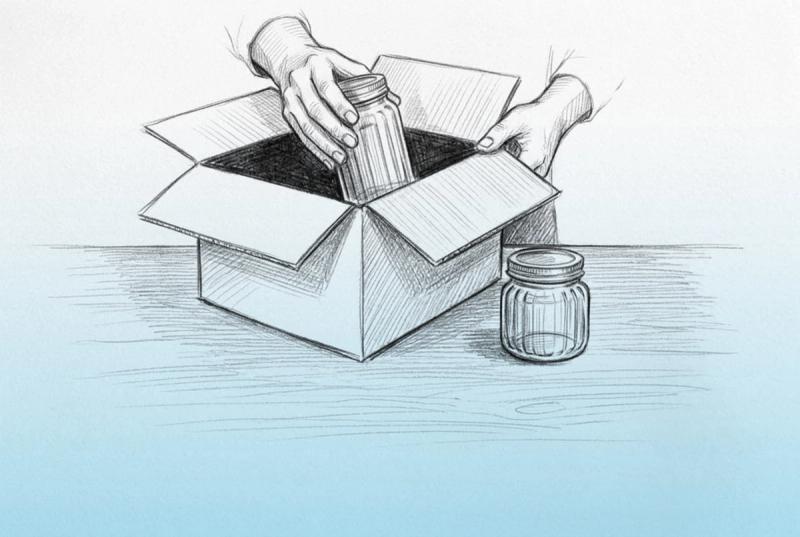
A mispick is an order fulfillment error where the wrong item, the wrong variant, or the wrong quantity gets picked and shipped to the shopper. Most brands learn about a mispick last, when the shopper opens the box, so the real fix is catching the error before the box is sealed.
Every order is a promise. Keeyu keeps it.
I'm Jevon Le Roux, co-founder and CEO of Keeyu, a proactive e-commerce operations company. Before Keeyu I ran apparel and retail operations. The pattern I saw was simple: the warehouse picks and ships, but the customer receives the wrong thing or an incomplete pack. Nobody on the brand side knows until the shopper writes in.
What is a mispick?
A mispick happens when a picker selects the incorrect product, the wrong size or color, or the wrong count from inventory, and that error travels into the box. A short pick, or partial pick, is the close cousin: one or more lines on the order never make it into the shipment. To the shopper it looks like an unplanned split shipment nobody warned them about. As reported by WareMatch, mispicks are a leading cause of customer complaints, returns, and operational cost in e-commerce and wholesale fulfillment.
My take: the brand hears about it last
Mispicks and partial picks usually surface only when the customer complains. The order shows as shipped, the tracking moves, the dashboards look green, and the first signal of failure is an unhappy email days later.
Partial picks and short shipments are often manual fire drills for e-commerce teams. There is no real-time visibility, so shoppers get told their order is on the way while nobody knows the true situation inside the parcel.
The types of mispick
Newcastle Systems lists the common forms:
- The wrong item picked instead of the correct one
- The wrong item picked in addition to the correct one
- The wrong quantity, too many or too few
- An item omitted entirely
- An item in unacceptable condition, such as damaged or mislabeled
Root causes of mispicks
The root cause of a mispick is the upstream condition that made the wrong selection easy, whether a person, a location, a label, or a system record. Diagnosing it means tracing each error back to one of those links rather than blaming the last pair of hands that touched the order.
My take: system, process, and people
Delivery problems in e-commerce come from system, process, and people issues, not just carriers. Incorrect Shopify syncing, inventory allocation, and warehouse shipping all sit upstream of the shopper's doorstep. Mispicks follow the same logic.
One version I hear goes like this: digital says you have stock, picker arrives at the bin, unit's not there. At that point the picker can short the order or grab the nearest lookalike, and neither outcome is what the shopper paid for.
Human error and fatigue
Picking is a repetitive walk through a large building. Newcastle Systems points to fatigue and less than optimal lighting as reasons mistakes creep in during a long shift. As reported by Grip Shipping, seasonal workers often do not know the difference between products that look similar but serve different purposes.
Slotting similar SKUs side by side
When an 8 oz and a 12 oz version of the same product live in adjacent bins, errors multiply. Grip Shipping calls out exactly this pattern. Size runs, colorways, and flavor variants are the usual suspects.
Bin labeling and location errors
A faded, missing, or swapped bin label sends a careful picker to the wrong unit. WareMatch also names WMS configuration errors that direct pickers to incorrect locations. That looks like human error on the floor, but it is a data problem.
WMS and inventory sync
If the storefront, the order management system, and the WMS disagree on stock, the pick list is built on a fiction. Allocation logic can reserve units that are physically elsewhere or already gone. It is the same record gap that drives overselling inventory you do not have.
Phantom stock and non-pickable inventory
Phantom stock is inventory that exists in the record but not on the shelf. In my experience, warehouse spot-checks often reveal dozens of exceptions where inventory is marked non-pickable, creating hidden stock discrepancies. Those gaps stay invisible until a picker hits an empty bin.
The cost of a mispick and the metrics to track
The cost of a mispick is everything it takes to make the order right. That means the replacement, the reship, return freight, support time, and the item you may never recover. The metrics that go with it measure how often orders and lines leave the building correct.
My take: pick SLA is not the customer promise
Pick SLA is necessary, and it covers one link. It is not the customer promise. A warehouse can hit its pick time on every order and still ship the wrong unit, and the SLA report will never show it.
What the published figures say
- An Intermec study of 250 senior supply chain and distribution managers found the average mispick costs approximately $22. Distribution centers lose nearly $390,000 a year to them, as reported by Newcastle Systems.
- The same study found 52% of companies reported a pick rate of less than 97%, as reported by Newcastle Systems.
- Industry estimates put the total cost of one mispick at $15 to $50 once handling, return freight, and replacement are included, as reported by WareMatch.
- A single mispick can cost 4 to 6 times the original order value once downstream effects are counted, as reported by Grip Shipping.
The formulas
- Order accuracy rate = orders shipped with no error / total orders shipped x 100
- Mispick rate per 1,000 lines = mispicked lines / total lines picked x 1,000
- Monthly mispick cost = number of mispicks x your cost per mispick
As reported by WareMatch, world-class operations run below one error per 1,000 lines picked, and average operations see 2 to 5.
A worked example (made-up round numbers)
These figures are illustrative only, chosen to make the math easy.
Input | Value | Note |
|---|---|---|
Orders per month | 10,000 | Example |
Lines picked per month | 20,000 | Two lines per order |
Mispick rate | 3 per 1,000 lines | Example |
Cost per mispick | $30 | Example |
That works out to 60 mispicked lines and $1,800 a month. If each error hits a different order, the order accuracy rate is 99.4%. Halving the mispick rate saves $900 a month before you count the shoppers who never come back.
How to prevent mispicks
Mispick prevention means changing the pick process so the wrong selection is hard to make and easy to catch on the spot. The methods below are tool-neutral, and any WMS or 3PL can apply them.
Scan verification at pick
The picker scans each unit, and the system refuses to confirm a line until the barcode matches the order. WareMatch describes mandatory scan verification at pick as the method that prevents the most common mispick errors.
Pick-to-light and put-to-light
Lights at each location show the picker where to go and how many units to take. As reported by WareMatch, systems that direct associates to exact locations significantly reduce selection errors.
Voice picking
The picker hears the location and quantity through a headset and confirms by speaking a check digit. Hands and eyes stay on the shelf rather than on a screen.
Slot similar SKUs apart
Separate lookalike variants into non-adjacent locations, which WareMatch says reduces the risk of pickers selecting the wrong one. Keep fast movers together by velocity rather than by product family. A size run spread across zones is slower to pick but harder to mix up.
Keep inventory records honest
Run regular cycle counts, adjust promptly for damaged or non-pickable stock, and keep storefront and WMS in sync. That stops phantom stock from reaching the pick list. Grip Shipping puts it plainly: when inventory counts are wrong, mispicks follow.
Every order is a promise. Keeyu keeps it.
Where to add QC checkpoints in pick, pack, and ship
A QC checkpoint is a verification step between pick and carrier handoff that catches an error before the box is sealed. The goal is a fail-safe that does not depend on the picker being right.
A checkpoint protects the order only if someone acts on what it finds before the shopper does.
Tote-to-order confirmation
Scan the tote against the order so the right items end up with the right order during batch or zone picking. WareMatch lists tote-to-order confirmation among its prevention steps.
Pack station scan
Scan every unit again at pack and compare against the order lines. As reported by WareMatch, double-check pack station scanning catches errors before the box is sealed.
Weight check
Compare the packed weight to the expected weight for the order. A missing unit or a heavier variant shows up as a variance.
Root cause logging
Grip Shipping recommends tracking every mispick back to root cause: training, process, or technology. Log the SKU, the bin, the picker, and the shift so patterns show up in weeks, not quarters.
Checkpoint | Catches | Cost to run |
|---|---|---|
Scan at pick | Wrong item, wrong variant | Low with existing scanners |
Tote confirmation | Items in the wrong order | Low |
Pack scan | Wrong item, short pick | Medium, adds time per order |
Weight check | Missing or extra units | Medium, needs scales and good item weights |
What to do for the shopper when a wrong item ships
When a wrong item ships, the fix is a fast replacement and a clear message that owns the error before the shopper has to chase it. Speed and honesty matter more than the exact remedy.
My take: tell them before they open the box
If the partial pick or mispick is known at the warehouse, tell the shopper before they open the box. If it surfaces through a complaint, apologize and ship the right item. Where the economics allow, skip making them return the wrong one first, and confirm the new tracking.
- Own the mistake in the first line
- Say what ships and when
- Skip the return for low-value items
- Close the loop when the replacement lands
For wording you can adapt, see our delivery delay message examples.
Where proactive operations fit
Proactive operations means watching the order promise end to end, so a broken link is detected before the shopper finds it. Keeyu gets shoppers what they want, on time, as promised. That is a different category from a helpdesk that answers faster after the damage is done. Read more in our guide to proactive e-commerce operations, or book a demo to see it on your own orders.
Every order is a promise. Keeyu keeps it.
Mispick FAQ
What is a mispick in a warehouse?
A mispick is a fulfillment error where the wrong product, the wrong variant, or the wrong quantity is selected from inventory and shipped. It includes picking the wrong size or color, picking too many or too few units, and omitting a line. The error usually goes unnoticed by the brand until the shopper opens the box and complains.
What is a good mispick rate?
As reported by WareMatch, world-class operations run below one error per 1,000 lines picked, while average operations see 2 to 5 errors per 1,000 lines. Track the rate per 1,000 lines rather than per order, because multi-line orders hide errors. Benchmark your own trend month over month, not just against an industry figure.
How do you calculate order accuracy rate?
Divide the number of orders shipped with no error by the total orders shipped, then multiply by 100. If you shipped 10,000 orders and 60 had an error, your order accuracy rate is 99.4%. Pair it with the mispick rate per 1,000 lines so you can see both the order impact and the line-level picture.
How much does a mispick cost?
Published estimates vary. An Intermec study put the average at approximately $22, as reported by Newcastle Systems, and WareMatch reports industry estimates of $15 to $50 per error. Your real figure depends on order value, shipping costs, and whether the wrong item comes back. Build your own number from those parts.
What causes most mispicks?
Most mispicks trace back to similar SKUs stored side by side, unclear bin labels, picker fatigue, training gaps, and inventory records that do not match the shelf. Phantom stock is a common hidden cause: the system says a unit is there and the bin is empty. See our list of top post-purchase issues for related failures.
How do you prevent mispicks?
Require a barcode scan at pick, slot lookalike variants apart, keep bin labels clean, and add a pack station scan or weight check before the box is sealed. Keep inventory records honest with regular cycle counts. Log every mispick back to a root cause so you fix the pattern rather than the single order.
What should I tell a shopper who received the wrong item?
Own the mistake in the first line, say what ships and when, and skip the return on low-value items where the economics allow. Send the new tracking and confirm when the replacement lands. Our guide on informing customers about a delay has message examples you can adapt for wrong-item orders.
Frequently Asked Questions
What is a mispick in a warehouse?
A mispick is a fulfillment error where the wrong product, the wrong variant, or the wrong quantity is selected from inventory and shipped. It includes picking the wrong size or color, picking too many or too few units, and omitting a line. The error usually goes unnoticed by the brand until the shopper opens the box and complains.
What is a good mispick rate?
As reported by WareMatch, world-class operations run below one error per 1,000 lines picked, while average operations see 2 to 5 errors per 1,000 lines. Track the rate per 1,000 lines rather than per order, because multi-line orders hide errors. Benchmark your own trend month over month, not just against an industry figure.
How do you calculate order accuracy rate?
Divide the number of orders shipped with no error by the total orders shipped, then multiply by 100. If you shipped 10,000 orders and 60 had an error, your order accuracy rate is 99.4%. Pair it with the mispick rate per 1,000 lines so you can see both the order impact and the line-level picture.
How much does a mispick cost?
Published estimates vary. An Intermec study put the average at approximately $22, as reported by Newcastle Systems, and WareMatch reports industry estimates of $15 to $50 per error. Your real figure depends on order value, shipping costs, and whether the wrong item comes back. Build your own number from those parts.
What causes most mispicks?
Most mispicks trace back to similar SKUs stored side by side, unclear bin labels, picker fatigue, training gaps, and inventory records that do not match the shelf. Phantom stock is a common hidden cause: the system says a unit is there and the bin is empty. See our list of top post-purchase issues for related failures.
How do you prevent mispicks?
Require a barcode scan at pick, slot lookalike variants apart, keep bin labels clean, and add a pack station scan or weight check before the box is sealed. Keep inventory records honest with regular cycle counts. Log every mispick back to a root cause so you fix the pattern rather than the single order.
What should I tell a shopper who received the wrong item?
Own the mistake in the first line, say what ships and when, and skip the return on low-value items where the economics allow. Send the new tracking and confirm when the replacement lands. Our guide on informing customers about a delay has message examples you can adapt for wrong-item orders.
References
- 1. WareMatch, "Mispick - Definition & Guide", https://www.warematch.com/encyclopedia/mispick. Mispick definition, root causes, benchmark of under 1 error per 1,000 lines (average 2 to 5), $15 to $50 cost estimate, scan verification and pack station checks.
- 2. Newcastle Systems, "What is a mispick in the order picking process?", https://www.newcastlesys.com/blog/bid/353292/what-is-a-mispick-in-the-order-picking-process. Types of mispick, fatigue and lighting, Intermec study figures ($22 average mispick, nearly $390,000 a year, 52% below 97% pick accuracy).
- 3. Grip Shipping, "Why Mispicks Hurt DTC Brands - And What To Do About It", https://www.gripshipping.com/why-mispicks-hurt-dtc-brands-and-what-you-can-do-about-it/. Similar SKUs stored together, 4 to 6 times order value cost estimate, inventory accuracy and root cause tracking.
Keep the promise.
See how Keeyu catches and fixes post-purchase issues before customers notice.
In one call, we’ll map your operations and show how Keeyu detects issues, decides what needs to happen, and takes action across your existing systems.
We’ll confirm your integration requirements and rollout plan during the demo.
